Community Updates
We are excited to share the successful defenses of the following doctoral candidates in the Summer and Fall Quarters of 2025:
- Mollie Bernstein, PhD (Lab of Dr. Larry Zweifel), dissertation titled, “The role of transient receptor potential canonical type 6 (TRPC6) channels in regulating ventral tegmental area dopamine neuron physiology and function”
- Leila Elabbady, PhD (Labs of Drs. Forrest Collman and John C. Tuthill), dissertation titled, “Neural Cartography: Methods for Mapping the Structure of Neural Networks”
- Jessica Jones, PhD (Lab of Dr. John C. Tuthill), dissertation titled, “From Reflex to Long-Term Avoidance: Neural Circuits for Nociception in Adult Drosophila melanogaster”
- Cara Nielson, PhD (Lab of Dr. Andy Shih), dissertation titled, “Pericyte Remodeling in Health and Alzheimer’s Disease”
- Makenzie Patarino, PhD (Lab of Dr. Abigail Schindler), dissertation titled, “Profiling the Heterogeneous Outcomes of Blast Trauma and Substance Use in Translational Mouse Models”
Program Updates
It has been a busy period for the Graduate Program in Neuroscience. Over the past few months, our community has remained deeply engaged in outreach, program development, admissions, and new initiatives aimed at strengthening connection and mentorship across the program.
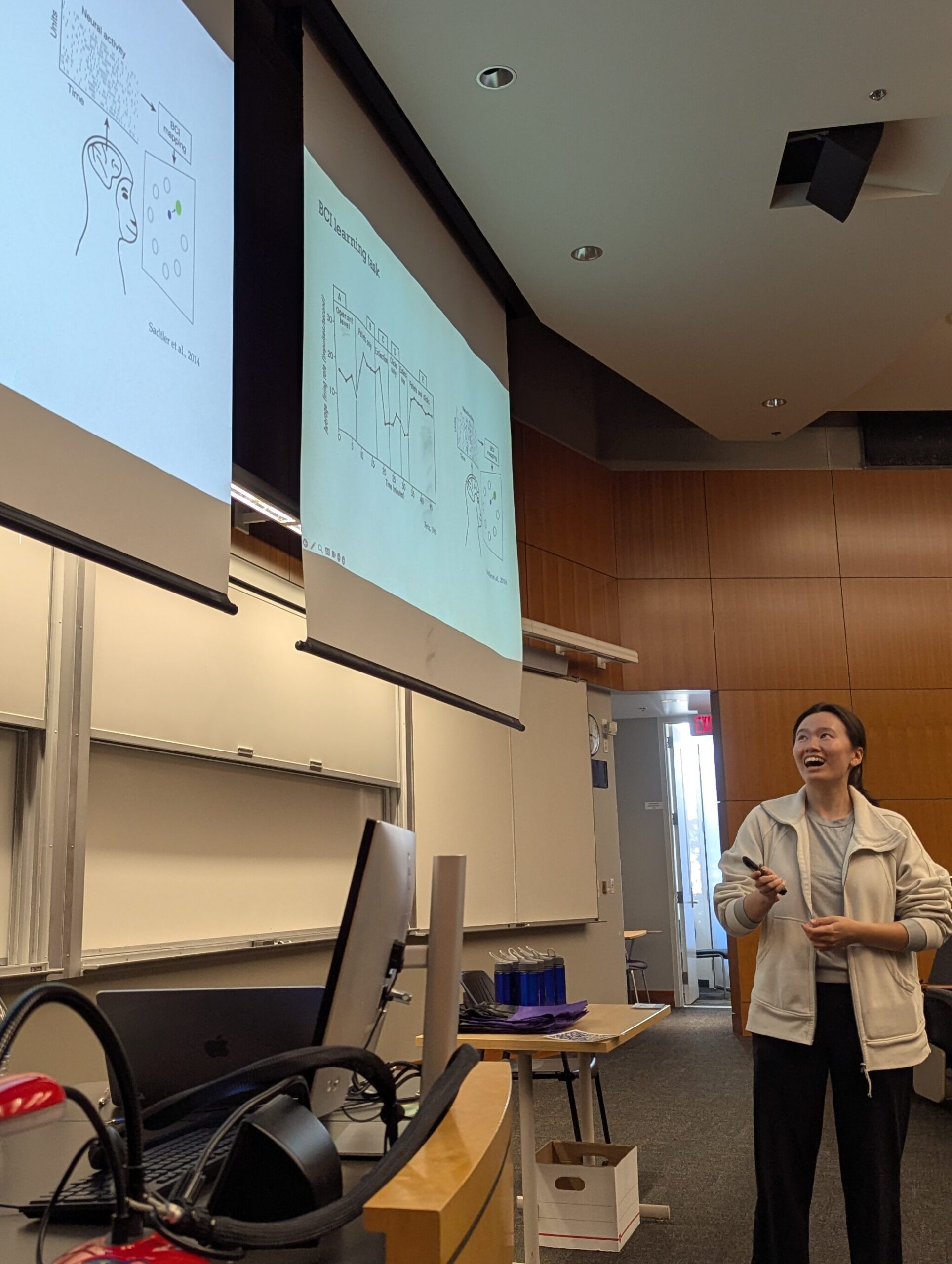
As part of our continued outreach and annual traditions, the GPN was invited to engage with undergraduate students and faculty in the Western Washington University Behavioral Neuroscience program. On October 15, graduate advisor Jennifer Simpson and GPN student Christina Wang traveled to Bellingham for a day of meaningful exchange between the two programs. Christina presented a talk titled “Illuminating learning rules with two-photon imaging, optogenetics, and brain–computer interface,” offering insight into cutting-edge computational neuroscience research while fostering connections across institutions.
During fall quarter, the program was also actively engaged in the 2026 Neuro PhD admissions cycle. This year, 387 applications were received, and 37 applicants have been invited to interviews on February 10 and 12. Admissions is a significant undertaking, and the program is deeply grateful to the 30 admissions committee members, including faculty, alumni, program directors, and staff, whose careful review and commitment made this process possible.
Committee work continued to play a central role in supporting the program this quarter. Highlights included the Events Committee’s planning and coordination of the annual retreat on September 22, the Curriculum Committee’s quarterly feedback meeting with the first-year cohort and continued work toward developing a computational neuroscience certificate, and the DEI Committee’s ongoing climate survey efforts. These efforts represent substantial behind-the-scenes work that helps the program run smoothly and brings the community together. We extend our gratitude to all of the program committees that support the program year-round through initiatives, events, and mentorship.
In recognition of this work, the program hosted its inaugural Committee Appreciation Holiday Party on December 11. This new gathering was created to celebrate the dedication of the administrative committees that sustain GPN and will continue as a recurring event, with an additional appreciation gathering planned for spring quarter.
Lastly, the GPN approved the launch of a new Coffee Mentorship Program, which will take effect beginning January 2026. This initiative is intended to support graduate students in expanding and strengthening their mentorship networks through informal, relationship-building conversations. The program will sponsor one coffee shop outing per student per calendar year, with reimbursement available for food and beverage expenses up to $20. Students may submit reimbursement requests using the designated online form.
Kudos and Recognition
We are excited to celebrate the many accomplishments across the GPN community, recognizing achievements in research, training, science policy engagement, and professional development.
Nzinga Hendricks, in the lab of Paul Valdamis, was awarded a position on the University of Washington Alzheimer’s Disease Training Program T32 training grant, beginning Summer 2025. This highly competitive program focuses on interdisciplinary and translational research in Alzheimer’s Disease (AD) and related dementias and supports advanced training for predoctoral researchers. It is the only formal program at UW focused on training investigators to carry out basic, clinical, and translational research in AD and related neurodegenerative disorders. We look forward to seeing how this opportunity supports Nzinga’s continued development as a researcher.
Katie Green, a graduate student in the lab of Steve Perlmutter, was accepted into the Institute of Translational Health Sciences TL1 Program for the 2025–2026 academic year. The TL1 is a one-year, mentored training program that supports predoctoral trainees annually in developing research skills in translational science. We look forward to seeing Katie’s continued growth in this cross-disciplinary community as she advances her research on epidural spinal stimulation and neuropathic pain.
Monica Tschang, in the lab of Abigail Schindler, and Larissa Robinson-Cooper, in the lab of Melissa Barker-Haliski, were selected as two of only 13 awardees nationwide for the 2025–2026 ASPET Washington Fellows Program. The Washington Fellows program supports early-career scientists in learning about and engaging with science policy, helping bridge the gap between research and public policy. Given their leadership and service through the Neuroscience Community Outreach Program (NCOG), we are excited to see Monica and Larissa continue to grow as leaders on the national stage.
Kimberly Derderian, in the lab of Horacio de la Iglesia, and Deja Monet, in the lab of Tim Cherry, were selected as Fellows of the SfN Neuroscience Scholars Program. This competitive, two-year program supports research career development and participation in the annual Society for Neuroscience meeting, and includes enrichment funding to support approved professional development activities, as well as structured mentorship through a dedicated mentoring team. We congratulate Kimberly and Deja on this recognition and look forward to seeing how they make use of these opportunities as they continue their training in the program.
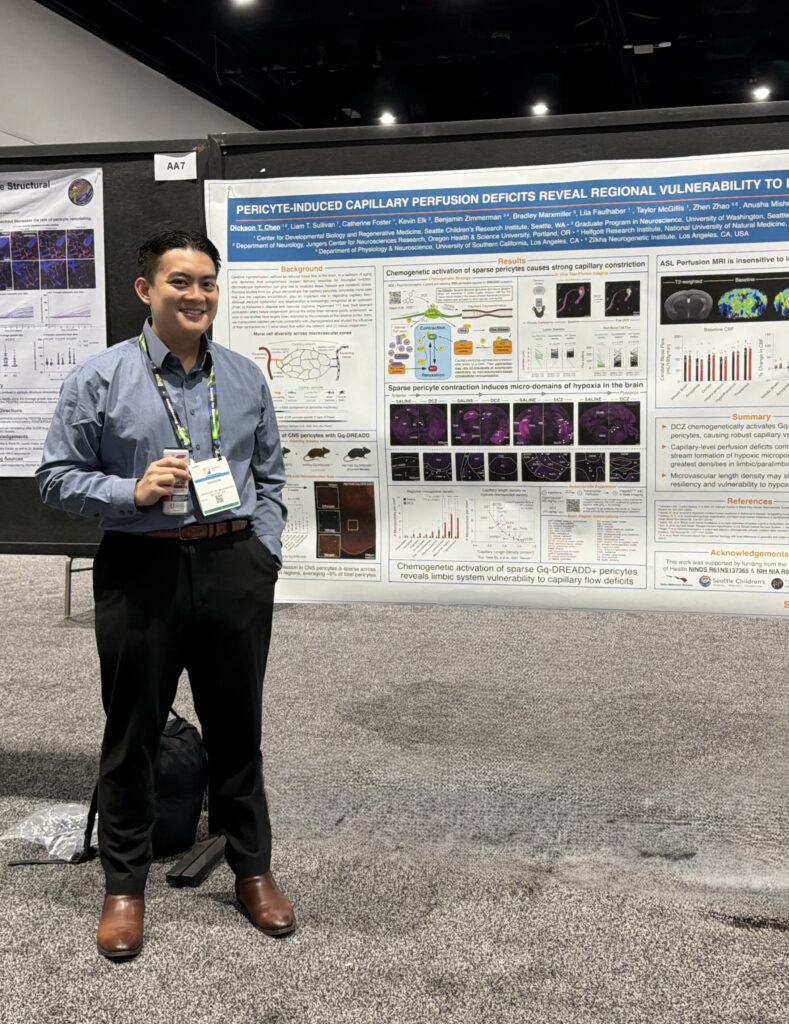
Dickson Chen, in the lab of Andy Shih, was selected as a recipient of the 2025–2026 STEM Chateaubriand Fellowship. As part of this award, he will begin conducting research in France in the spring, strengthening international collaboration in science and technology. He was also awarded the 2026 American Heart Association Predoctoral Fellowship, which supports integrated research and clinical training for promising graduate students. boration in science and technology. He was also awarded the 2026 American Heart Association Predoctoral Fellowship, which supports integrated research and clinical training for promising graduate students. We are excited to see the impact of these experiences on Dickson’s personal and professional growth and how they will contribute to strengthening scientific collaboration between the United States and France.
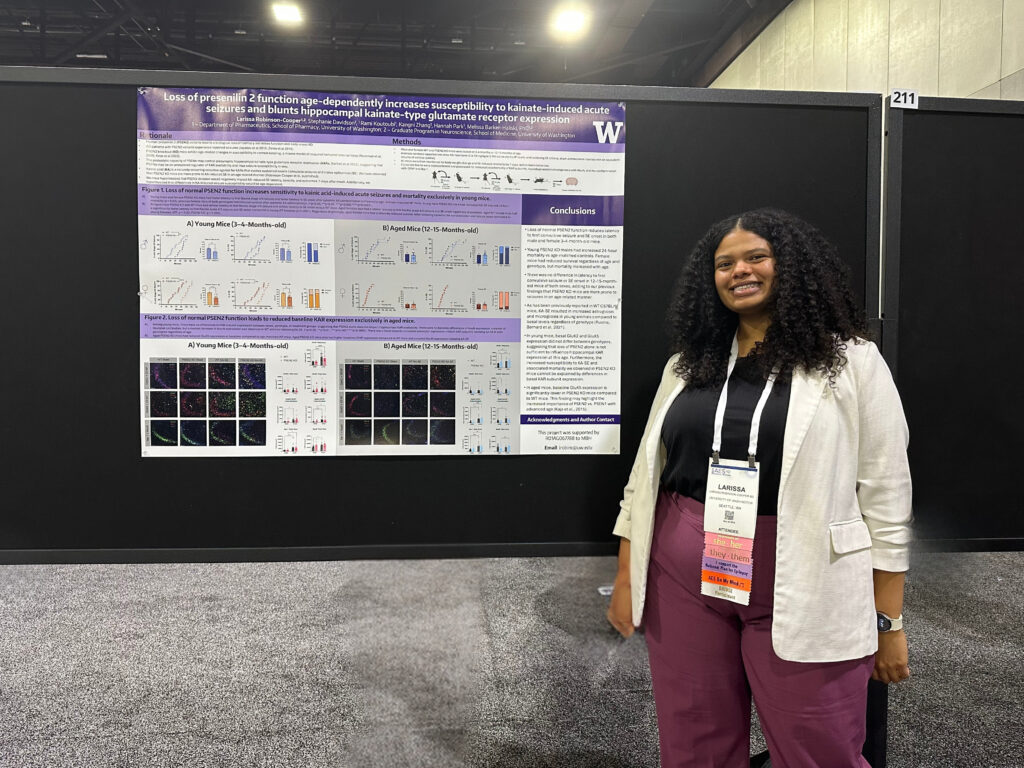
Larissa Robinson-Cooper also published her first manuscript, “Loss of presenilin 2 function age-dependently increases susceptibility to kainate-induced acute seizures and blunts hippocampal kainate-type glutamate receptor expression,” in Experimental Neurology, with coauthors Stephanie Davidson, Rami Koutoubi, Kangni Zhang, Hannah Park, and senior author Melissa Barker-Haliski. The study examines how loss of presenilin-2 alters age- and sex-dependent seizure susceptibility in a mouse model by disrupting hippocampal kainate receptor regulation. This work was also highlighted at the 2025 American Epilepsy Society Annual Meeting BRIDGE Session, marking a significant milestone in both research impact and professional visibility.
Looking Forward
The coming months will bring several opportunities for engagement and community connection within GPN. On January 14, the program will host its annual Student Town Hall, providing students with an opportunity to participate in an open Q&A dialogue with program directors and staff. February will mark the start of recruitment season, beginning with applicant interviews and followed by recruitment events in March. Looking further ahead, a program-wide Climate Survey Student Town Hall is scheduled for April 9, offering space for discussion and reflection on program climate and future initiatives related to diversity, equity, and inclusion.