Community Updates
We are excited to share the successful defenses of the following doctoral candidates in the Winter and Spring Quarters of 2026:
- Cassidy Burke, PhD (Lab of Dr. Garret Stuber), dissertation titled, “Multimodal interrogation of cell type-specific transcriptional states and brain-wide activity profiles in maladaptive opioid use”
- Gillian Grennan, PhD (Lab of Dr. Angela Fang), dissertation titled, “Neurocognitive mechanisms of body dysmorphic disorder“
- Marina Soo-Ahn Han, PhD (Lab of Dr. Brian Kraemer), dissertation titled, “Discovering genetic regulators of pathological tau accumulation using a fluorescent C. elegans model of tauopathy”
- Monica Tschang, PhD (Lab of Dr. Abigail Schindler), dissertation titled, “Neural CartoMicrobial Mediators of Trauma: The Gut-Brain Axis in Adverse Outcomes Following Blast Injurygraphy: Methods for Mapping the Structure of Neural Networks”
We also extend a heartfelt congratulation to Andy Pelos, for earning his Master’s degree last autumn. Andy’s achievement is highlighted by his research in the labs of Dr. Richard Palmiter and Dr. Garret Stuber. Andy’s thesis is titled, “Acute and Consolidation Transcriptional Programs in the Central Amygdala Following Parabrachial Pain-circuit Activation.”
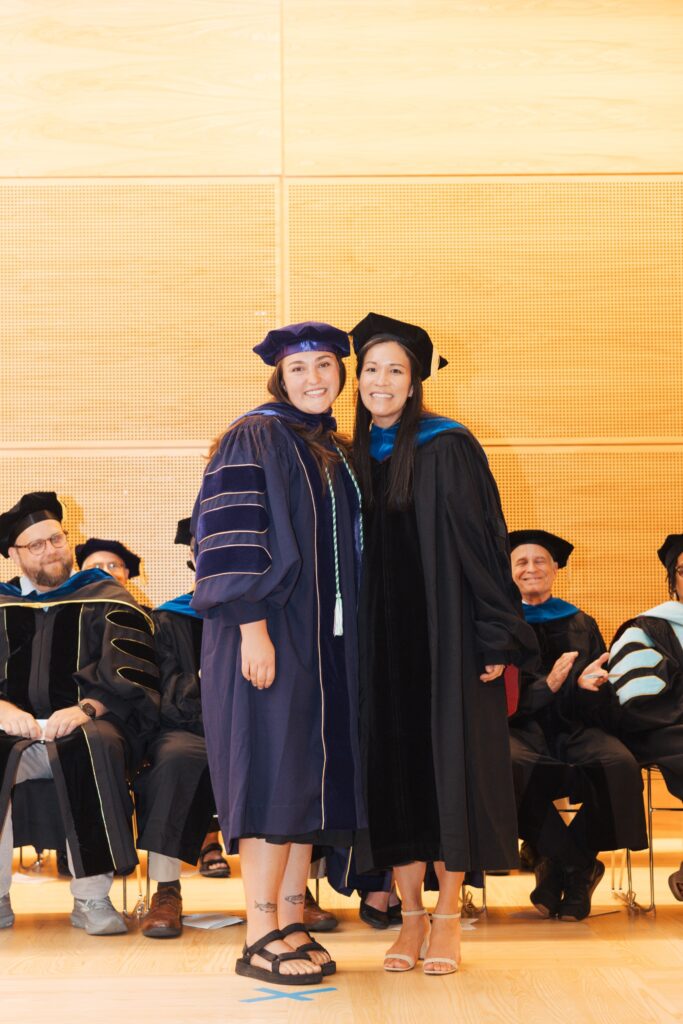
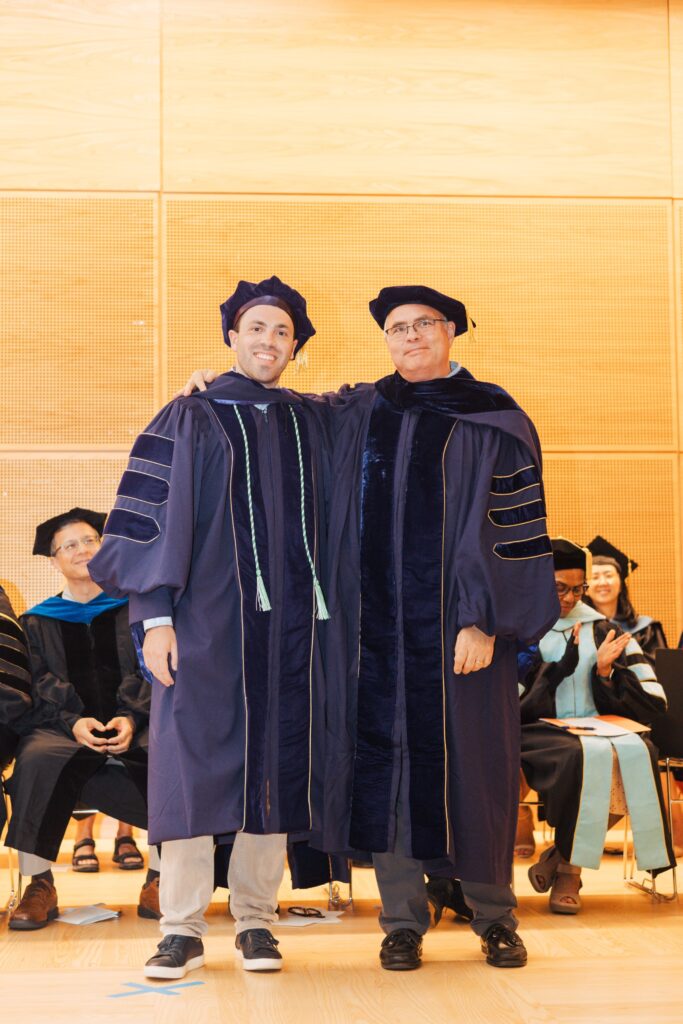
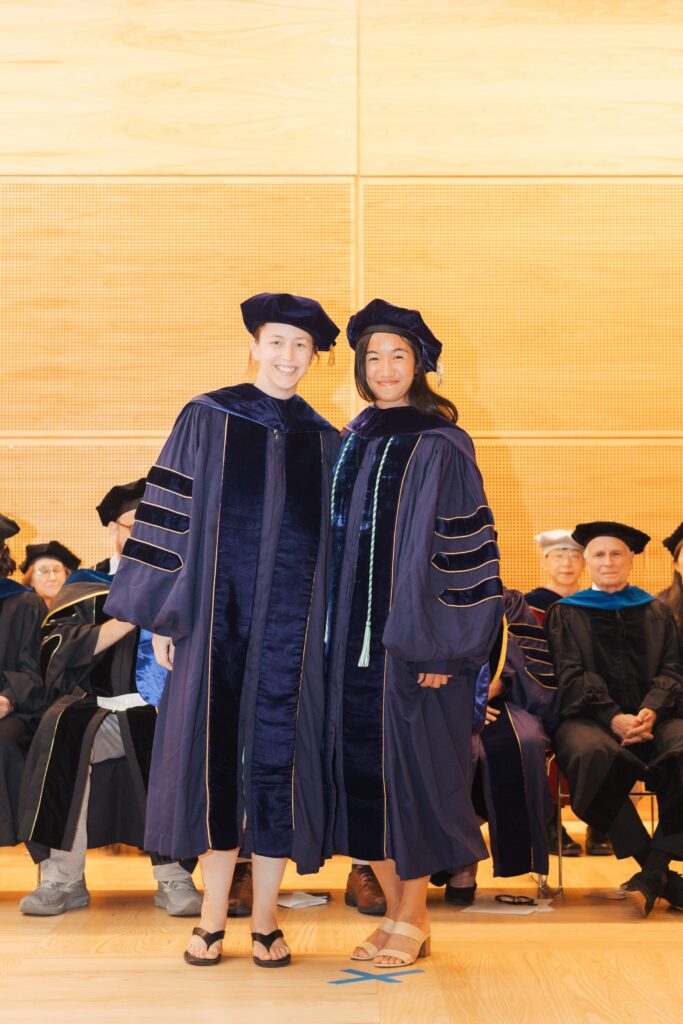
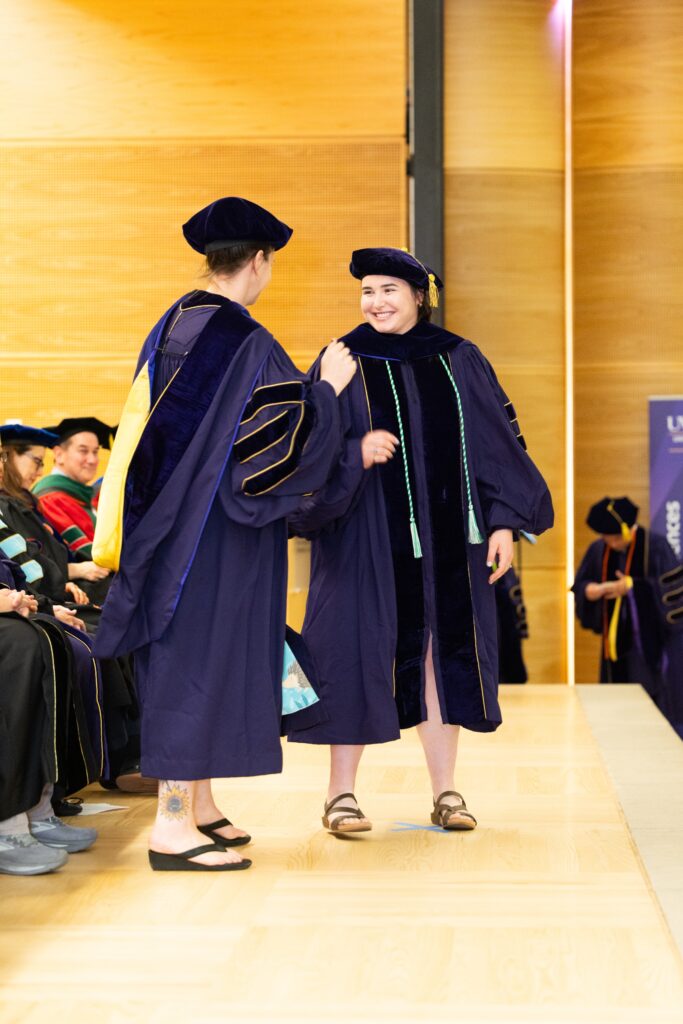
We’re proud to share that between September 2025 and June 2026, 9 students successfully defended their dissertations. Doctoral graduates were honored at the Interdisciplinary Biomedical PhD Hooding Ceremony last month. Below are photos from the celebration:
Program Updates
We would like to thank all faculty and student members who are rotating off our administrative committees for their time, dedication, and service to the program. We also extend a warm welcome to those beginning new committee roles and look forward to the contributions and perspectives they will bring. We are excited to welcome our new committee chairs: John Tuthill, who will serve as Chair of the Curriculum Committee; Kevin Coffey, who now serves as Chair of the DEI Committee; and Fred Rieke, who will serve as Chair of the Student Advancement Committee.
This year, the program hosted two rounds of recruitment events in March and June as part of our admissions process. Recruitment cycles continue to be dynamic and unpredictable, requiring flexibility and thoughtful planning from faculty, students, and administrators. We are excited to welcome our newest cohort of six students and look forward to supporting them as they begin their journey with the program.
In May, the program hosted its inaugural Faculty Orientation & Refresher event, an initiative proposed by the DEI Committee to promote transparency, strengthen communication, and provide additional support for faculty working with GPN students. The session covered key topics including GPN policy awareness, program operations, and strategies for supporting GPN students. The event had a strong turnout, and we look forward to continuing to expand faculty engagement and incorporate additional feedback in future sessions. The slide deck from the orientation has been shared via email. Faculty members with questions or suggestions are encouraged to reach out to program administration.
We are pleased to announce that the GPN has been awarded a prestigious T32 Training Grant, a significant milestone that reflects the strength of our research community and commitment to training the next generation of neuroscience scientists.The grant will be led by Principal Investigators Steve Perlmutter, Sheri Mizumori, and Garret Stuber, whose leadership and dedication have been instrumental in securing this award. The T32 will provide enhanced research training opportunities, professional development, and support for trainees within the Neuroscience Program. This achievement represents the collaborative efforts of faculty, staff, and trainees across the program and underscores the excellence of our neuroscience training environment. Additional information about the T32 program, trainee opportunities, and application processes will be shared in the coming weeks. We look forward to providing more details soon and celebrating this exciting accomplishment with our community.
Kudos and Recognition
Randall Eck, in the lab of Brian Kraemer, has been recognized as an outstanding member of the neurodegenerative disease research community, consistently demonstrating a commitment to supporting fellow PhD students, undergraduate researchers, and the broader UW research community. Randall has contributed significantly to strengthening the student experience, including working with students over several years to collect and organize housing information that can now be shared with prospective students as they navigate their transition to graduate school. We also appreciate his generosity and collegiality in helping orient and welcome new program staff several years ago, reflecting the supportive and collaborative culture he continues to foster within and beyond GPN.
The GPN community was well represented at the CoNECTOME 2026 Symposium at the University of Washington. Belle Liu, a graduate student in the lab of Matt Golub, served as a panelist in a discussion on navigating career paths between academia and industry. CoNECTOME (formerly Neural Computation and Engineering Connection) is an annual symposium hosted by the Center for Neurotechnology that features invited speakers, UW faculty and postdoctoral researchers, as well as poster sessions and discussions on topics including neuroethics.
In addition, Alexander Ladd, in the lab of Nick Steinmetz, presented in a CoNECTOME workshop titled, The Brain-Wide Representational Geometry of Multi-Timescale Behavior, and Faeze Aminmansoor, in the labs of Adrienne Fairhall and Karel Svoboda, presented in a workshop titled, Latent Behavioral States in a Dynamic Foraging Task. We congratulate our students for sharing their work and perspectives with the broader neuroscience community.
Larissa Robinson-Cooper, in the lab of Melissa Barker-Haliski, was recently featured in University of Washington Magazine for her research exploring the connection between Alzheimer’s disease and epilepsy. The feature highlights not only her scientific work, but also her commitment to encouraging and inspiring the next generation of scientists.
Monica Tschang, a recent GPN graduate, will begin a new role as an Education Specialist at the Allen Institute. We congratulate Monica on this exciting next step and look forward to seeing the impact she will continue to make in neuroscience education and outreach.
Looking Forward
As we look ahead to the coming academic year, we hope you will join us in celebrating and strengthening our GPN community.
If you serve on a GPN committee, we would love the opportunity to recognize and celebrate your contributions at our Committee Appreciation Event on August 10. Please check your email for additional details about the event.
We are also looking forward to the annual GPN Annual Retreat on September 28, hosted by the GPN Events Committee.
Finally, beginning this year, the GPN Newsletter will move to an annual publication schedule rather than a biannual one. Quarterly reminders will continue to be sent to students and faculty inviting submissions and updates about program accomplishments, events, and milestones. These contributions are deeply appreciated and help make the newsletter a meaningful reflection of our community and its achievements.